


.jpg)

Message
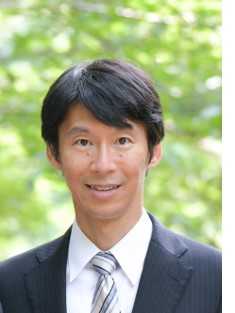
The Kyushu University’s EU Centre, which consists of academic staff from a variety of disciplines aims at promoting research, education and outreach activities related to the EU and wider Europe. As the Director of this EU Centre, of which both Professor HACHIYA Machiko and Professor IWATA Kenji have worked hard to establish the foundation, I am working for the development of this Centre into the primary regional hubs for EU and European Studies in East Asia by offering variety of intellectual activities such as symposiums, seminars, EU Diploma Programmes, and public lectures. Particularly in the Jean Monnet Centre of Excellence Kyushu 3rd stage (JM-CoE Q3) commenced in December 2024, the Centre is targeting at: (1) the development of an integrated “Ecosystem of EU Research and Teaching” and (2) the education of the public in the EU values and policy.
The EU and Europe are important to us who live in Japan for at least the following three reasons.
Firstly, Europe is important as a benchmark of regional integration. Reflecting on the experiences of the two world wars, post-war Europe has built various regional cooperation frameworks whilst maintaining sovereign states. At the heart of this European integration is undoubtedly the EU. To study in detail the history and the recent developments of this integration, together with the unique challenges for those who achieved such a deep integration, will help us to better envisage the “unity in diversity” in various organisations in Japan and East Asia.
Secondly, the EU acts as a forerunner tackling common issues of our modern society. Many EU member states have been encountering such problems as energy and environmental problems, aging population, economic gap, migration issues, and others common in modern society. A thousand lessons can be drawn from Europe, which has long been working on these challenges.
Thirdly, Europe is important as a global actor. As an integrated economic area, with 27 member states, a population of 450 million, and 15% of the world GDP, the EU behaves as an important global actor in politics, economics, culture, science and technology. For all those who work and study in universities that seek to become more global, it is necessary to understand the EU better and to cooperate with the EU in every research field.
In addition, for a university like ours located in Fukuoka, it is also of great significance to conduct research and education on the EU and wider Europe. One reason for this is the accumulation of research and education on Europe at Kyushu University to date. Our university has gathered specialists in various fields of the EU and Europe including such as EU politics, EU economy, and EU law besides European culture, history, environment, etc. Orchestrating the powers of such experts is an important mission for our university, which aims at driving social change with integrative knowledge. Another is the fact that the Fukuoka and Kyushu region themselves has historically been a gateway to Asia and Europe. In ancient times, advanced knowledge and cultural artifacts from the continent were transported to Kyoto and Edo via Kyushu. Even today, Fukuoka Airport handles 25 million international flights per year, and over 3,000 ships on foreign routes dock at Hakata Port each year. Ito, where the main campus of Kyushu University is located, is a region that has been open to the world since ancient times, as was described as “Itokoku” along with famous Yamataikoku in the Wajinden (3rd cent.).
The EU Centre seeks to intellectually address critical contemporary challenges, through offering opportunities for researchers and students from humanities and social sciences to natural sciences as well as citizens and policy makers to bring together and deepen their knowledge of the EU and wider Europe.
HASUMI, Jiro
Director, EU Centre
Kyushu University