


.jpg)

Affiliation at time of completion of the programme: School of Sciences, Kyushu University
■Affiliation at time of completion of the programme: School of Sciences, Kyushu University *completed EU-DP before graduation

I found out about the EU Centre’s EU-DPs programme around the time the debate on Brexit was being discussed quite vigorously. Under such circumstances, I became aware again that there are regions in Europe where various kinds of movements can be freely made, and I was very interested in the historical background of the EU, and I wondered “How is it possible to do such a thing?” As a result, I decided to think about the “local community” in my own way, and as a first step, I decided to enroll in and complete the EU-DPs programme. However, since the target courses were not offered in my department, I took almost all of the required credits from courses provided in other faculties. Therefore, I had to choose classes offered at times when there were no classes in my own department, which was somewhat of a restriction. However, as there were many courses provided in the EU-DPs programme, I took several courses each semester in a carefully planned way, so that even a student like me was able to complete it.
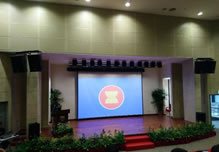
Through the EU-DPs programme, I studied at the School of Law, Letters, Engineering, and Agriculture. I gained basic knowledge related to things such as Roman law, German literature, architecture, and soil science, which was a great experience. And I began to think that in the EU, researchers in these fields are working on projects in cooperation, which broadened my horizons. Also, when I had the opportunity to participate in a programme called “ASEAN in Today’s World 2020” to learn about regional integration at Malay University in Malaysia, I talked with students from ASEAN countries making use of my experience at EU-DPs, and I think I was able to spend a more fulfilling time.
In this way, the EU-DPs programme provides an opportunity to think about regions around the world that aim to connect beyond the boundaries of countries. If you are interested in it, I would encourage you to join us. We recommend starting with the “Fundamentals of the European Union” course, which is offered in the spring semester!